No products in the cart.
What is a floral installation?
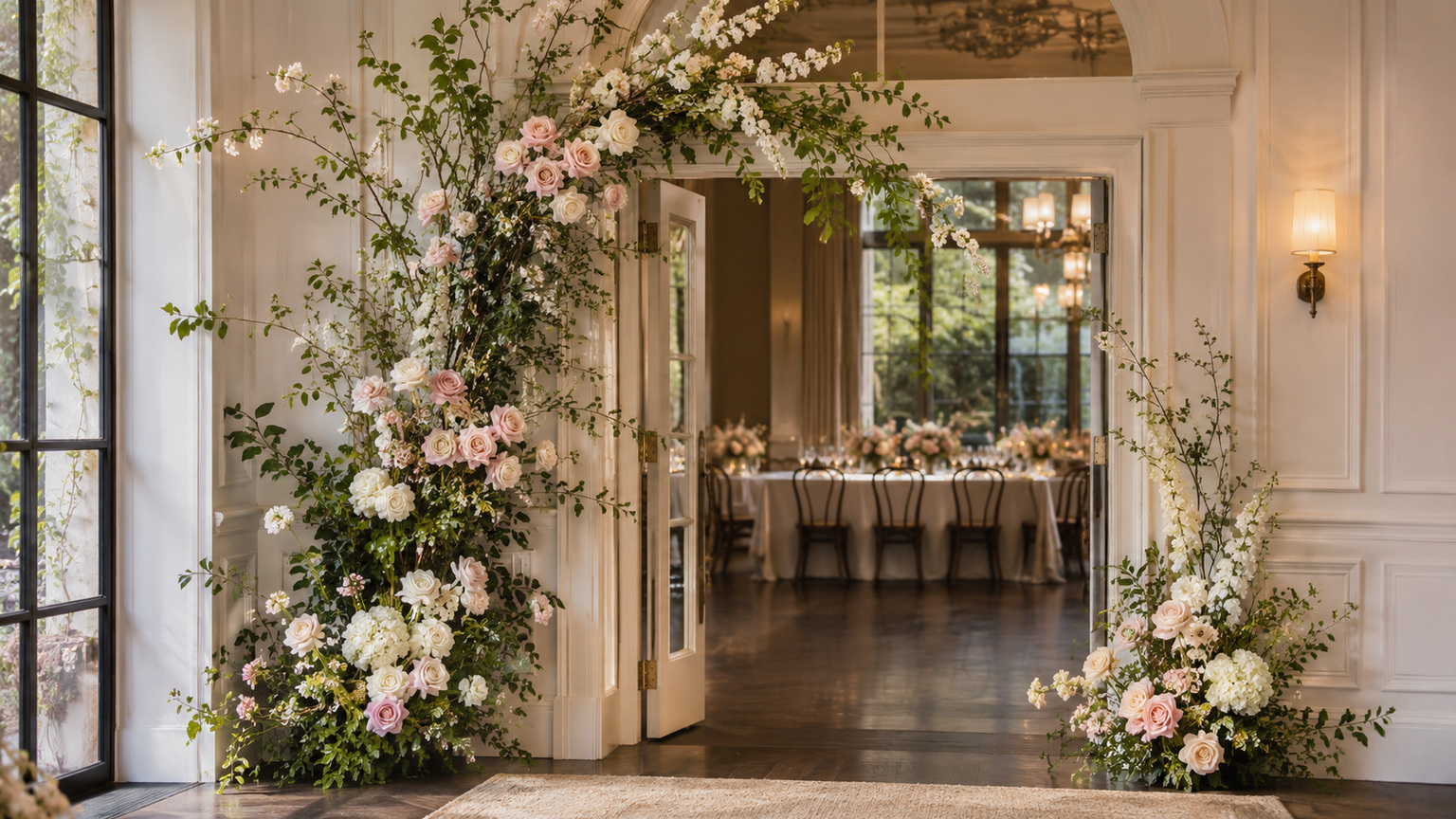
A floral installation is a flower design planned for one particular place at an event, such as an entrance, a stage or a wall. It is made to work with that spot and the room around it. A bouquet or a vase arrangement is chosen as a piece in its own right. It still makes sense when it is carried or moved.
So the label comes from purpose and placement. It does not come from the number of stems or the price.
Designed for one part of the event
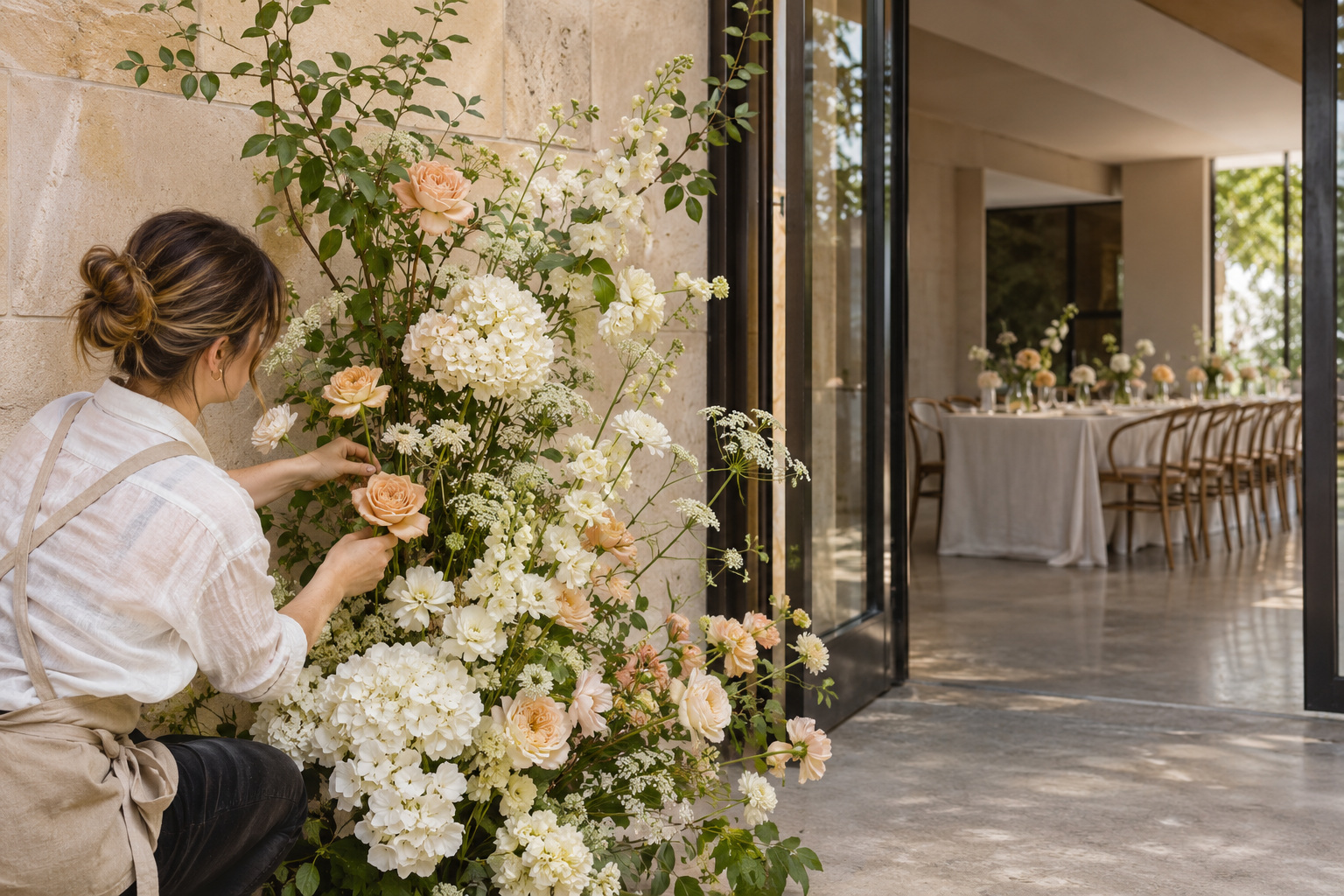
An installation starts with a location. The design begins with where guests arrive, where they look and what the room already offers. The flowers are then planned for that position.
As a general illustration, picture flowers built around the doorway of a function room so they frame the way in. Now picture the same stems split into small vases along the tables. The flowers might be identical. The first design belongs to the entrance, while the second belongs to the tables.
A design like this is seen differently, too. A table arrangement is usually seen up close. An entrance feature or a backdrop is often seen from across the room as guests walk in. One Australian event florist describes designing its stage and backdrop pieces to look right under event lighting and from a distance.
Florists do not all define the word the same way. An Australian installation studio, for example, uses it only for pieces built at the venue rather than carried in finished. Either way, an installation is planned for its spot.
How an installation differs from an arrangement
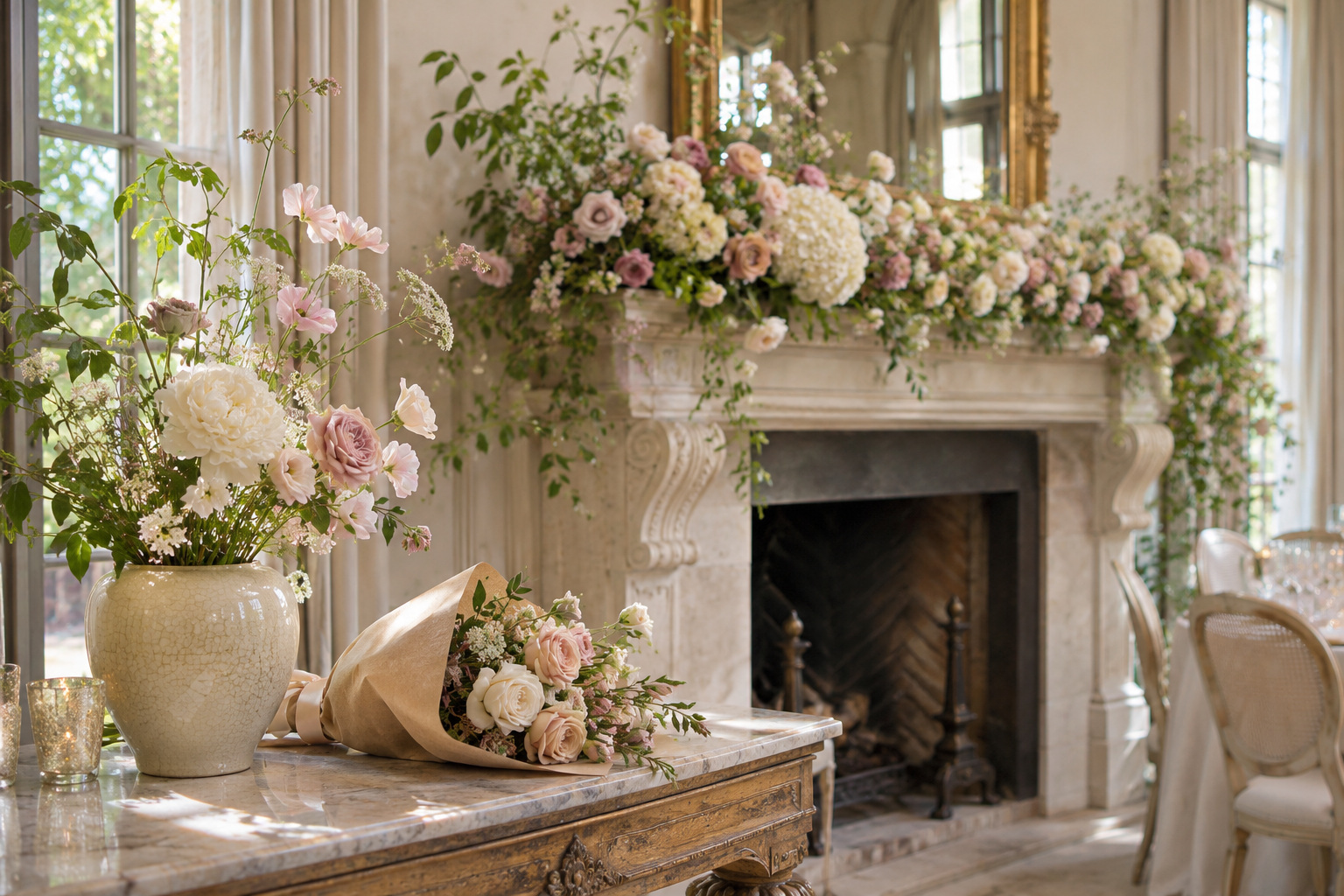
Florists use three terms that are easy to blur. A bouquet is a group of flowers bound together and usually wrapped, so it can be held or carried. An arrangement is designed into a container, such as a vase, box, ceramic piece or basket. An installation is designed around a place.
The terms overlap in practice. Several contained arrangements can be grouped along a mantel or stage edge to form one larger installation. A container on its own does not settle what a design is called.
| Feature | Bouquet | Arrangement | Installation |
|---|---|---|---|
| Designed for | Holding or carrying | Its container | One spot in the venue |
| Can it move? | Yes, it is carried | Yes, it can be set down elsewhere | Only if it is replanned for a new spot |
| Usually seen | In the hand | Up close, often on a table | As part of the room |
Neither format is better or more luxurious than the others. Each one does a different job.
Forms a floral installation can take
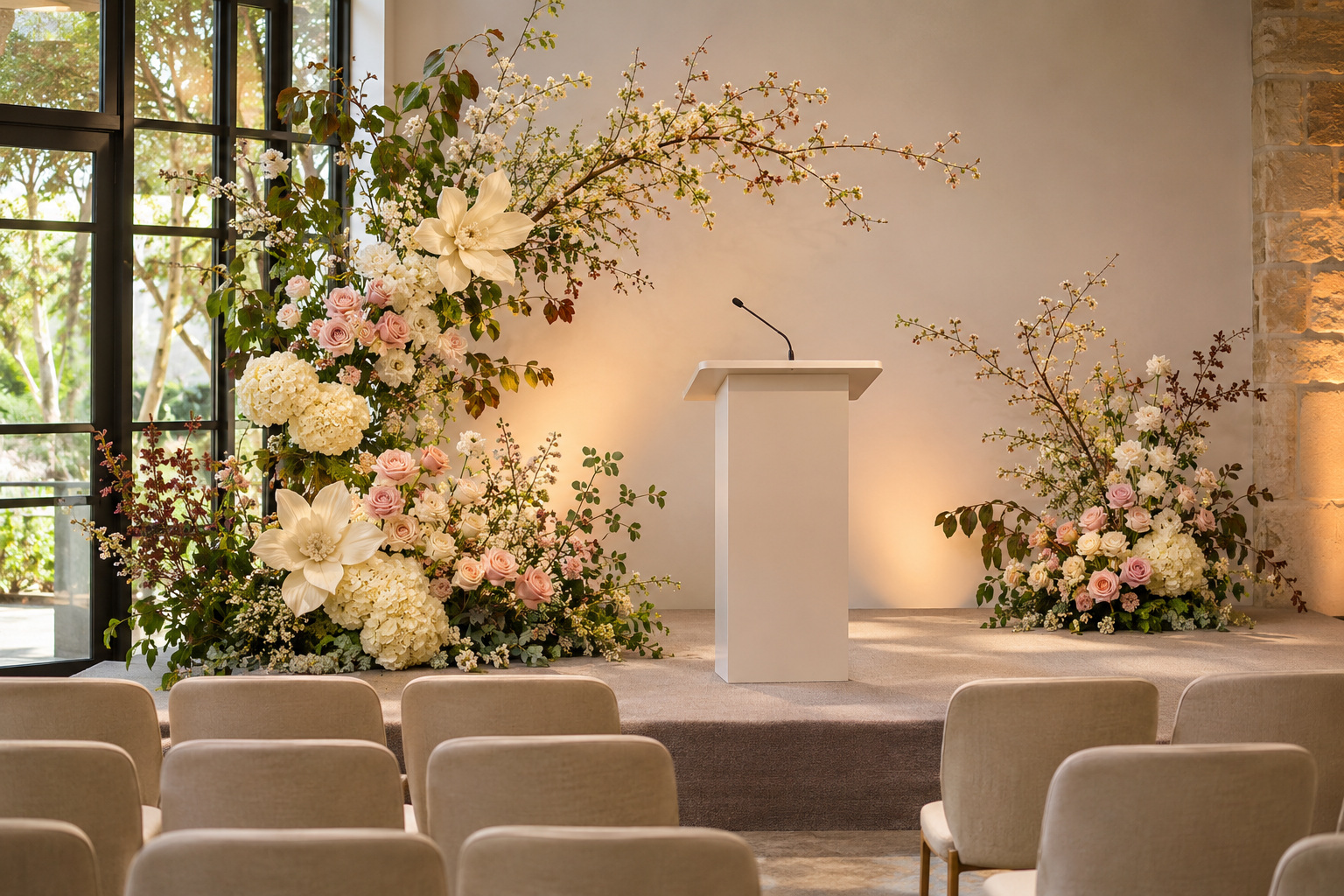
Hanging designs are only one option. Australian event florists who publish their work show a wider range of forms:
These are general examples from across the industry. Not every installation hangs, and not every florist offers every form. The examples above are often large, but there is no set size at which an arrangement becomes an installation.
- Entrance features that frame the doorway or welcome area as guests arrive.
- Stage and backdrop designs behind a speaker or a presentation, such as at a product launch.
- Floral walls, used as a backdrop for photos or as a feature at an entrance.
- Arches that mark one spot in the room as a threshold.
- Suspended designs hung from above, including floral ceilings.
- Foyer and reception flowers that greet people in a building’s entry.
When an event needs an installation
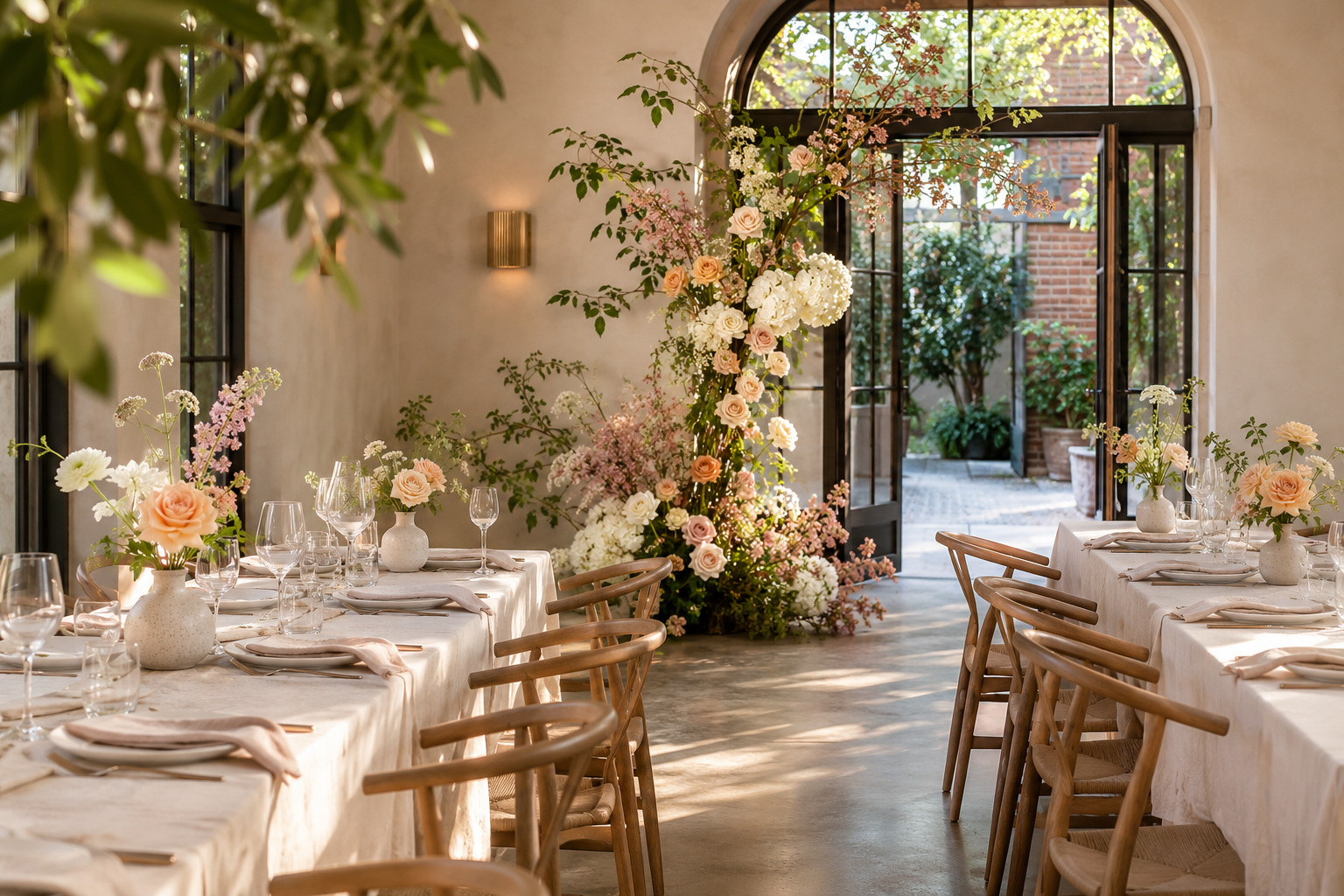
Start with the job the flowers have to do. If you want one place that people notice, an installation is designed for that job. It might be the welcome as guests arrive, or the area behind a speaker at a corporate gathering.
If the flowers mainly need to bring colour and softness to each table, standalone table arrangements may already cover it. In that case an installation may add little.
An event can use both. A private celebration might have one entrance feature, with simpler arrangements on the tables carrying the same palette through the room.
Whatever the form, the design has to suit the venue. A venue may limit access times or what can be fixed to its walls and ceilings. That is why a design is planned with the florist and the venue for that particular space.
At Monet de Fleur in Camberwell, the event flowers page covers intimate dinners, corporate gatherings, private celebrations and larger events. It lists statement installations and entrance features as well as table arrangements and venue styling. Its enquiry form asks for your event date and venue.