No products in the cart.
Which wedding flowers should take priority?
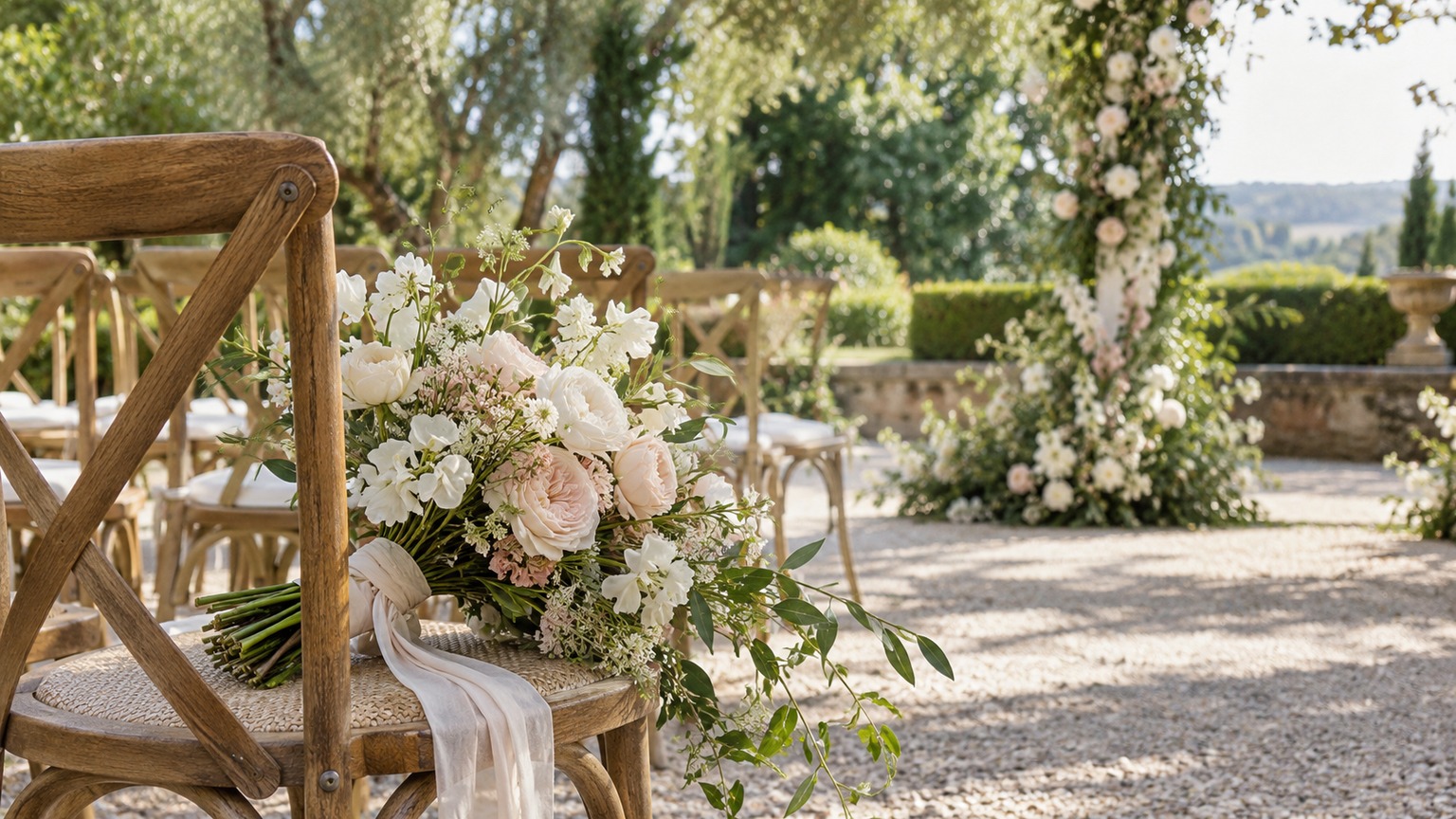
Wedding flowers do not have to cover the whole day. You can choose which moments deserve the emphasis rather than decorating every area. A bouquet, ceremony flowers and reception styling play different roles. Which one comes first is a preference rather than a rule. That preference gives the design a starting point.
Your venue may already have a strong visual character. Your saved images may share a colour or shape without using the same flowers. Those details can guide a coherent design while leaving room for what is available in season.
Choose the moments you want flowers to define
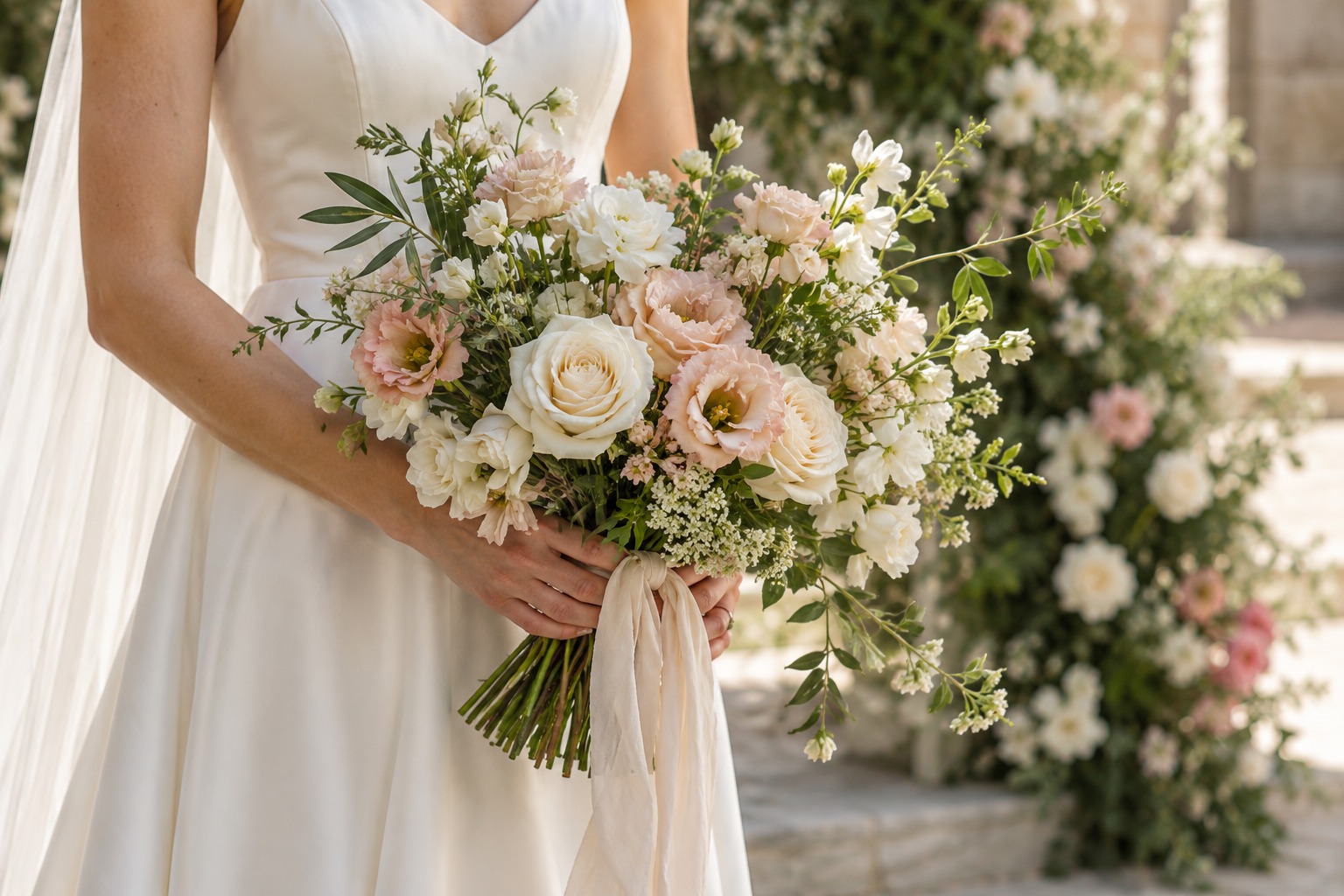
These three wedding flower choices play different roles. Setting them side by side makes the choice between them concrete. This is a design comparison, not a list of things every wedding has to buy.
You do not have to choose only one, and no order is right for everybody. Naming your favourite moment is what turns a general wish for flowers into a design with a centre.
- A bridal bouquet travels with the person holding it. It gives personal flowers a different role from arrangements placed in the venue.
- Ceremony flowers shape one setting for one part of the day. They frame the spot everyone is looking at while the vows are said.
- Reception styling belongs to the hours after. It can bring flowers into the setting where guests gather for the meal and celebration.
Let the setting guide the design
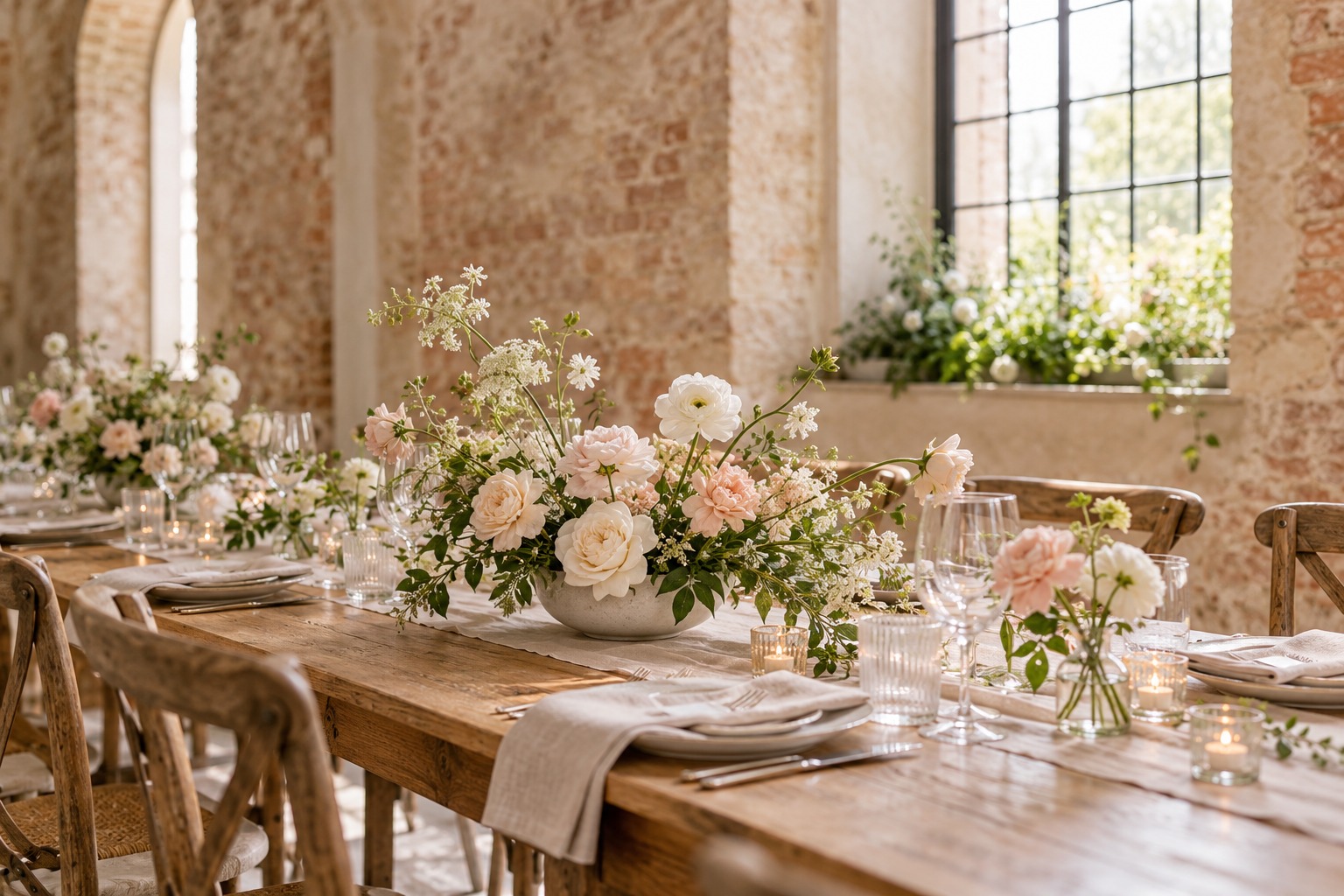
The same arrangement reads differently in two different rooms. For example, a loose garden arrangement may have a different effect against plain walls than among established greenery. That is a design comparison, rather than a rule about either venue.
A space with features of its own gives the flowers something to work with. A garden, a high window, old brickwork or a long timber table already carry part of the atmosphere. Flowers can sit alongside them rather than compete with them. In a plainer room, you might choose a few floral focal points. Decorating every surface is one option, not an obligation or a guarantee of a better result.
So the decision worth making is a simple one. What do you want the flowers to draw the eye to in this particular space? Your venue and your date are the practical frame around that answer. Use them to discuss the proposed design and its practical limits with the florist and venue.
Find the thread in your inspiration images
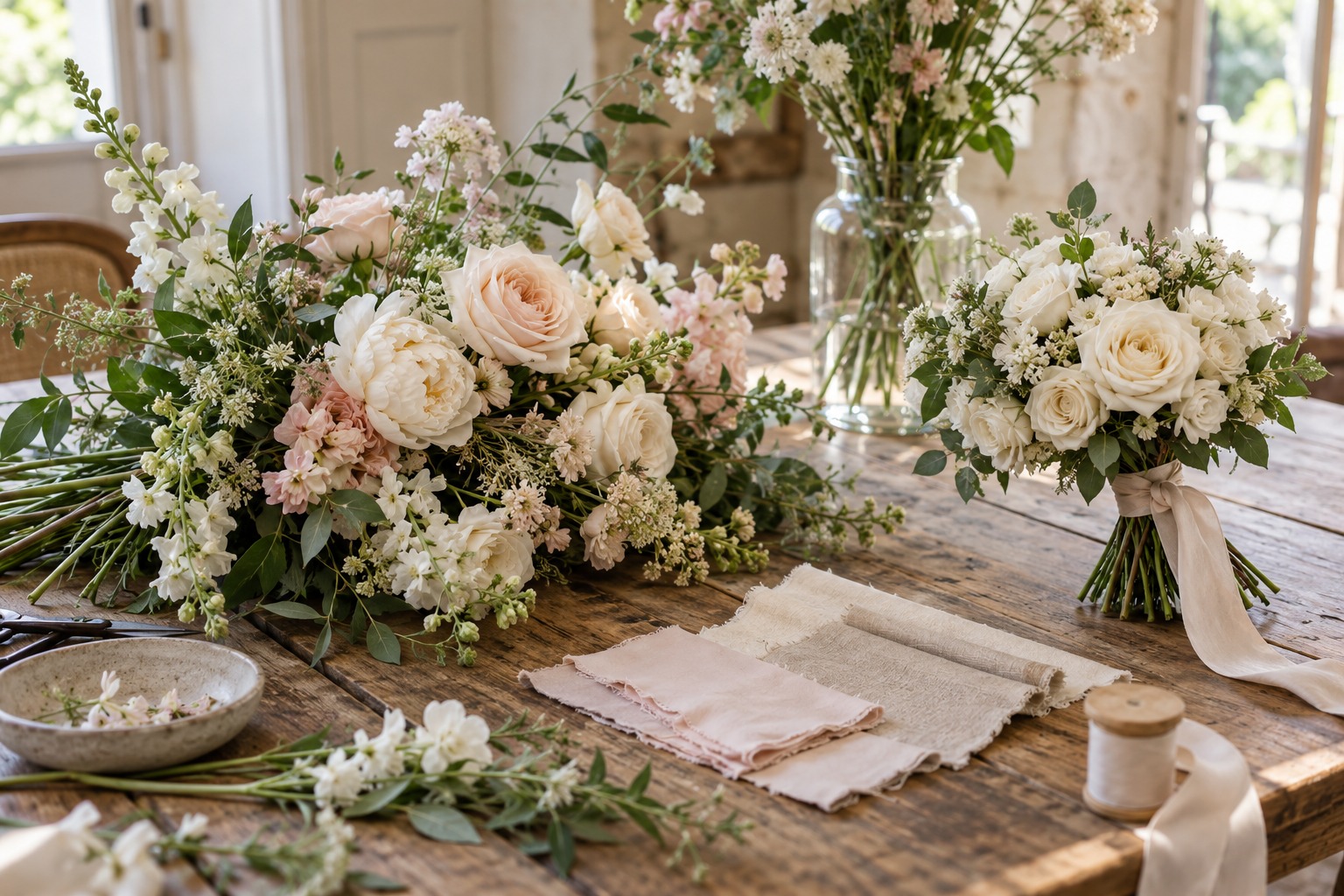
A folder of saved images is a list of things you like. It is not yet a design. The useful step is working out what the appeal is in each one.
Compare the palette: the colours and how light or deep they are. Look at the shape, whether an arrangement is loose and open or tight and defined. Consider the mood of the whole picture, which comes as much from the light and the setting as from the flowers.
As an illustration, picture two saved photographs. One is loose and garden-like, with soft stems in several tones and plenty of movement. The other is a tight, strongly shaped arrangement in a single colour. Both can be beautiful. Their contrasting shapes give you different directions to discuss with your florist.
A visual direction can leave more options than one required flower. If movement and seasonal softness are what you keep saving, that is a direction a florist can work to. If it is a defined shape and one strong colour, that is a different direction and worth saying plainly.
Set priorities without a price formula
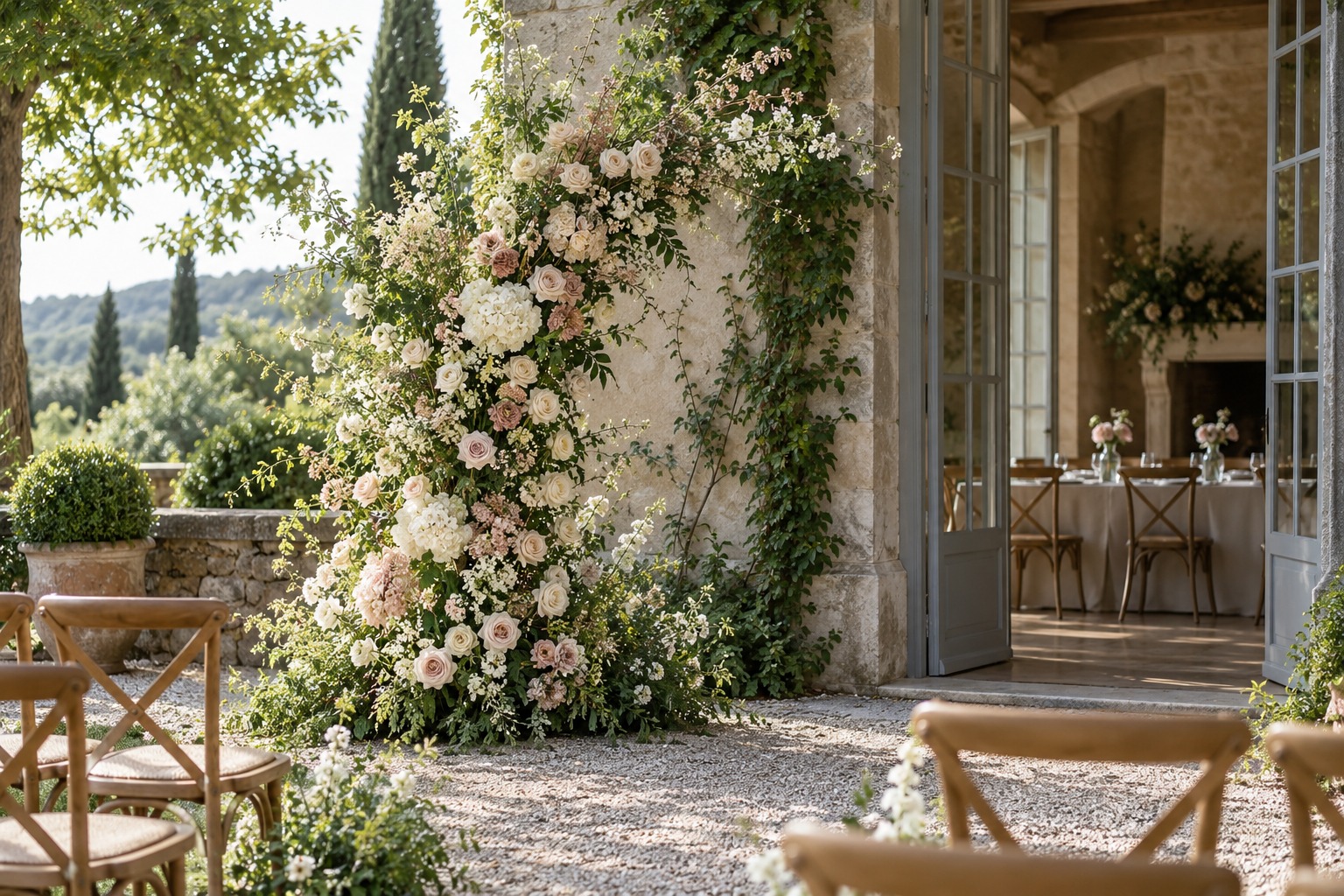
Priorities matter most when something has to give. No share of a budget works for every wedding, and a figure from somebody else’s day tells you very little about yours.
Choose which part of the day should remain central if the proposed scope needs adjustment. That does not mean its exact design can never change. It gives you a preference to work from when comparing options, instead of reducing every area in the same way.
A clear preference is also honest about the trade. You might give the ceremony more emphasis and choose simpler tables, or make reception styling the priority. Neither choice establishes the quantity, price or result of a particular proposal. Either way the answer is a preference, not a sum.
Keep the design flexible when flowers are seasonal
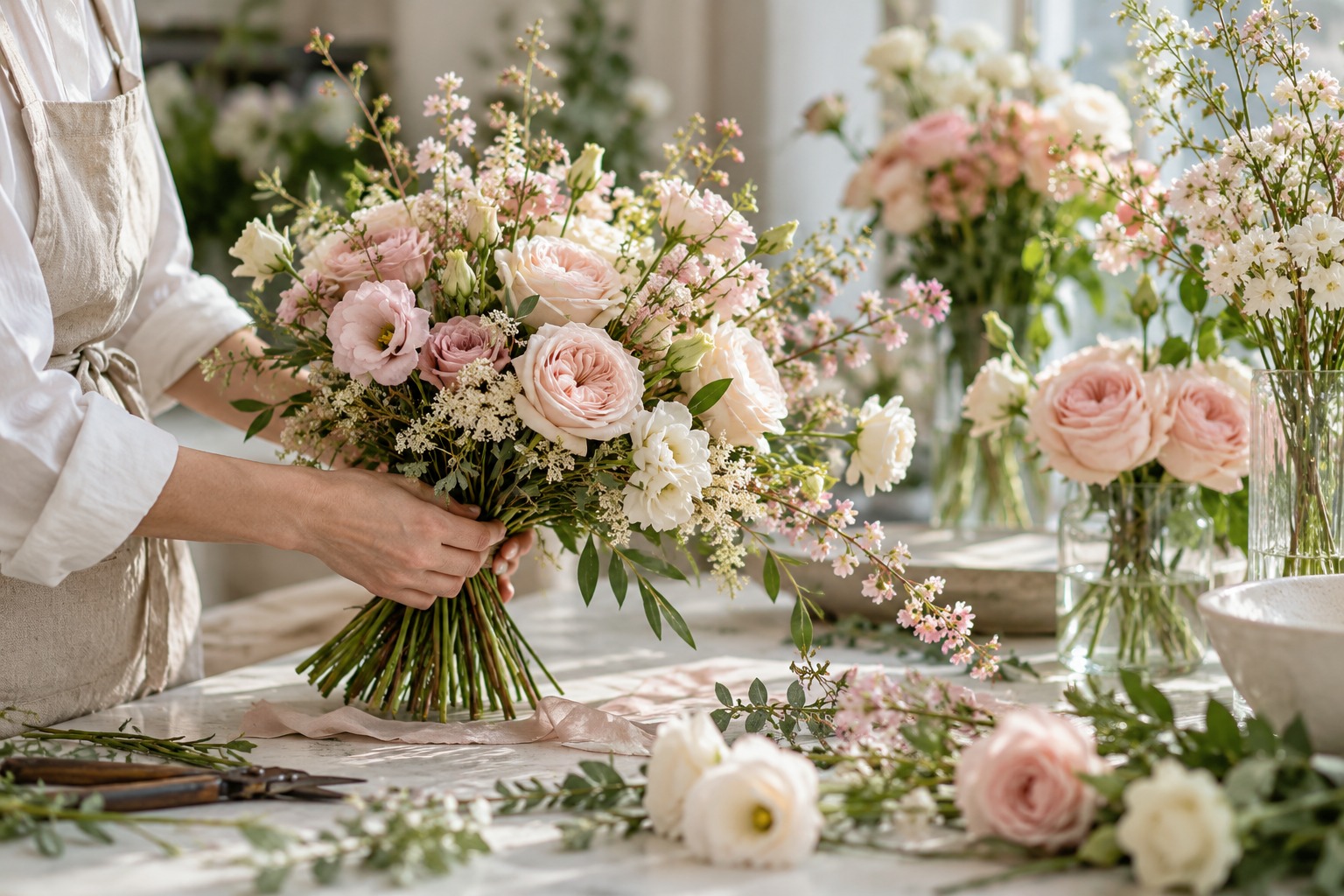
An inspiration photograph shows one set of flowers at one time of year. The same flowers may not be available in the week of your wedding.
Keeping a palette or shape open to different varieties can allow seasonal alternatives. A soft pink, loosely gathered look describes a design direction rather than one ingredient. What can be sourced and agreed for the date still matters. One required variety is a narrower choice.
Discuss any proposed change against the qualities you want to retain, then agree the flowers and design for your wedding.
Use your chosen emphasis and visual direction to begin discussing the day. The wedding flowers page at Monet de Fleur in Camberwell describes the service and has an enquiry form for your date and venue. No single priority list replaces a design agreed for your wedding.