No products in the cart.
Which funeral flower arrangement should you send?
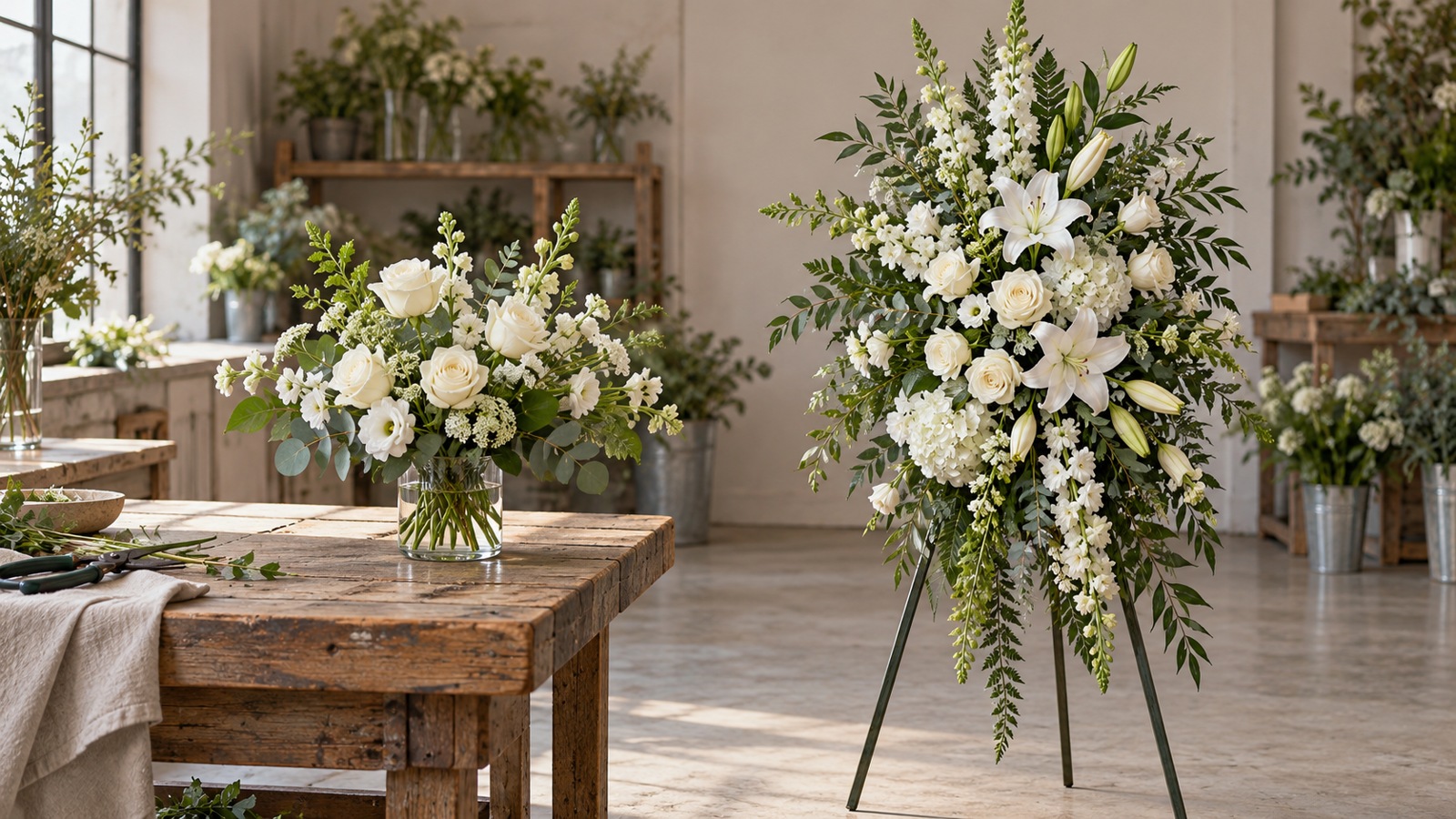
For the service itself, a standing spray or a flat tied sheaf is the usual choice. For the family home, send a bouquet, a posy or a vase arrangement. Casket flowers sit on the casket and belong to the immediate family, so leave those to them. Funeral flower arrangements are chosen by who you are to the family and by where the flowers are going.
You have just been told that someone has died. You want to send something and you do not know what to order. Getting it wrong in front of grieving people is the real fear. This is written for the sender, not for the family.
What are the main funeral flower arrangements?
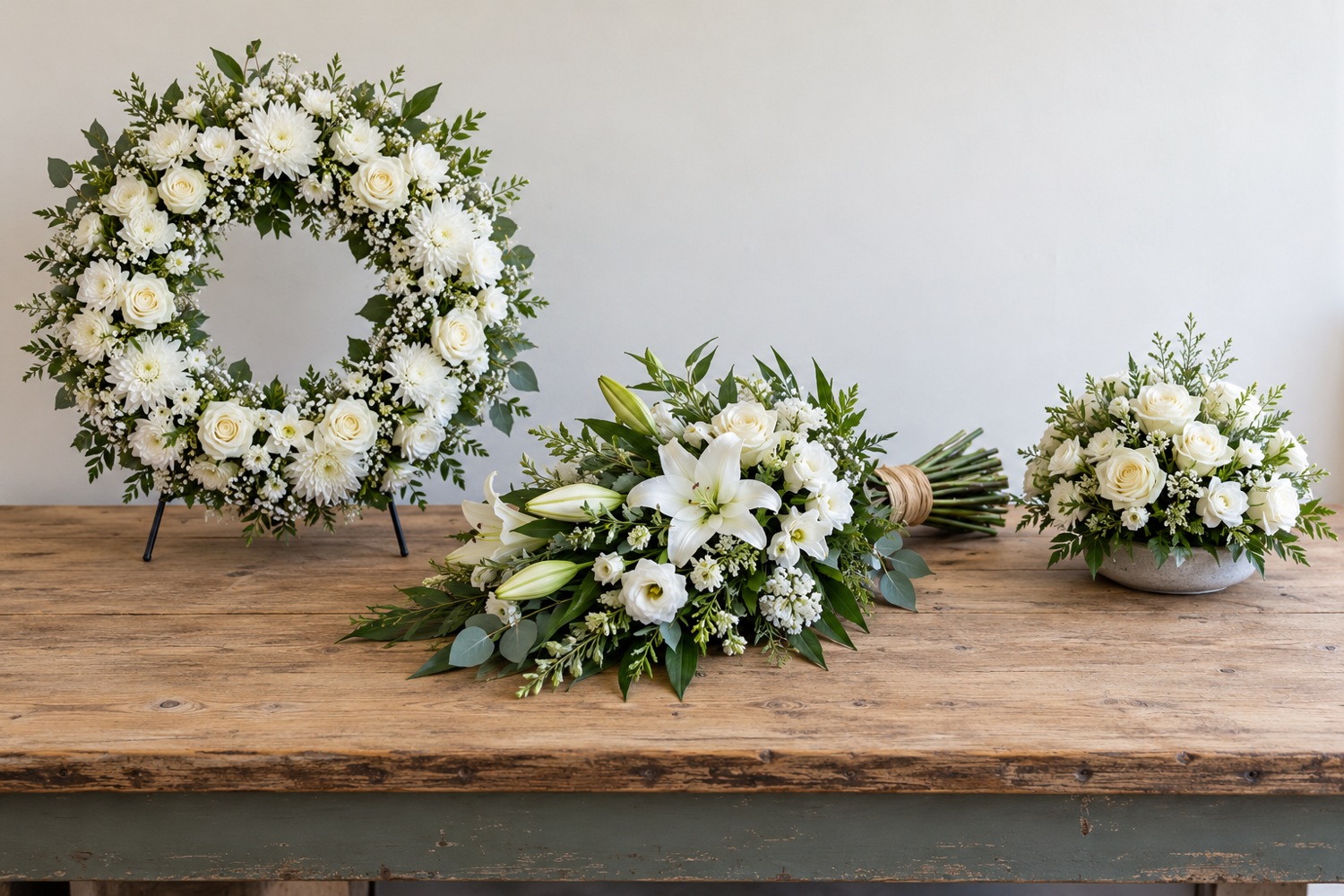
Six forms cover most of the funeral flower arrangements you will be offered. Bethel Funerals, an Australian funeral provider, sets out most of them in its guide to organising funeral flowers.
Bouquets are the form friends and relatives often send to the family home.
- A wreath is a ring of flowers built on a circular frame.
- A sheaf is a flat bunch tied at the stems and left loose. It is made to be carried and laid down.
- A posy is a small round arrangement, low enough to sit on a table and be seen over.
- A vase arrangement arrives in its own container with water, so nobody has to find a vase.
- A standing spray is a large one-sided display. It sits on an upright easel or wire stand at the front of the service.
- Casket flowers, often called casket sprays or casket sheaths, are made for the top of the casket.
Which arrangement should you send, and when
The form follows who you are to the family. That is the whole decision.
Immediate family look after the casket flowers. Those are usually organised with the funeral director. If you are not immediate family, this is the one form to leave alone. Sending it as a colleague is the mistake people worry about most.
Extended family and close friends have the widest choice. A standing spray or a tied sheaf suits the service. A bouquet or a vase arrangement suits the house.
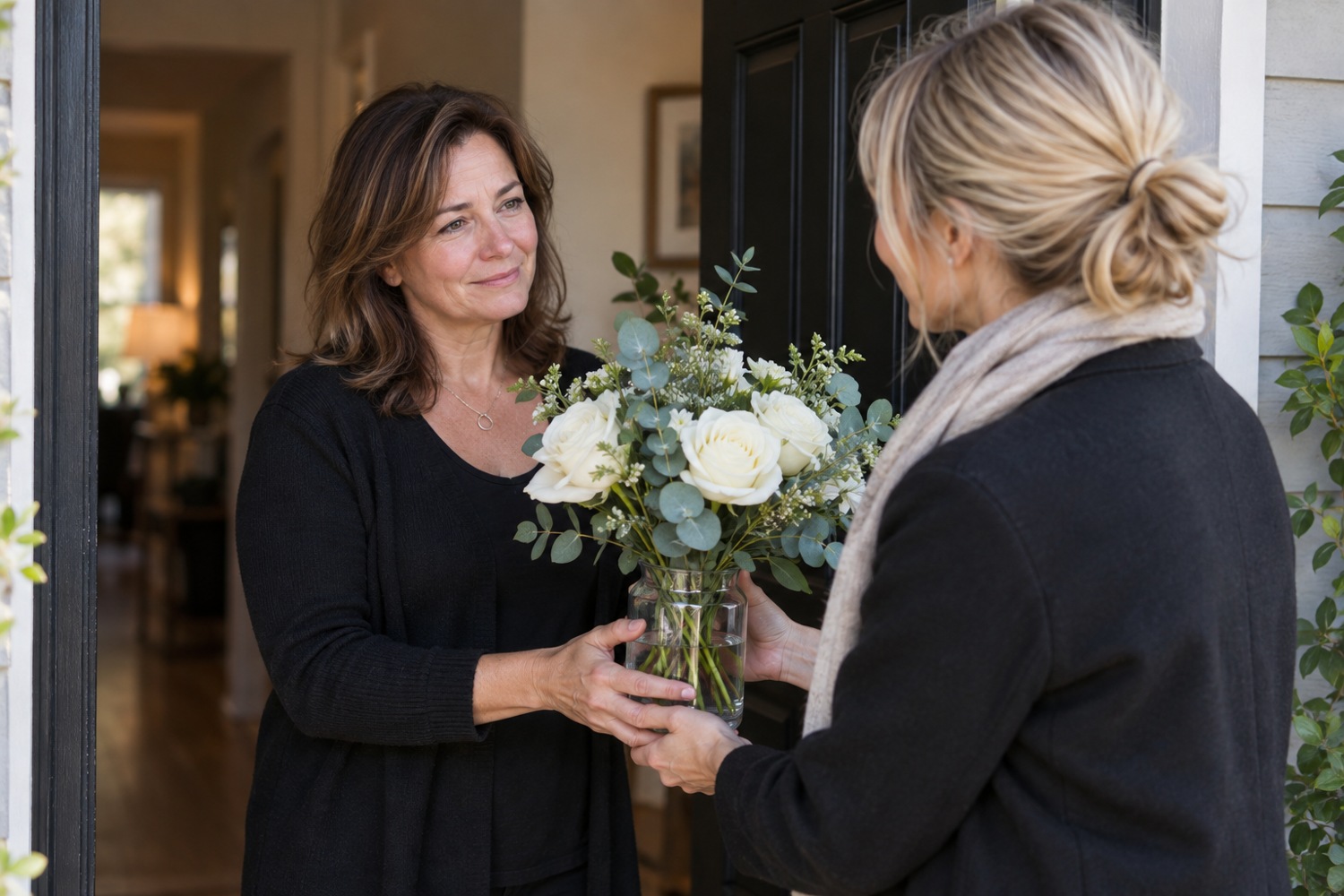
Colleagues and neighbours are on safe ground with a bouquet or a posy sent to the home. A workplace often sends one tribute from everybody rather than several small ones.
If you cannot be at the service, send to the home. Flowers arrive once the house is quiet again.
Where the flowers are going changes what to send
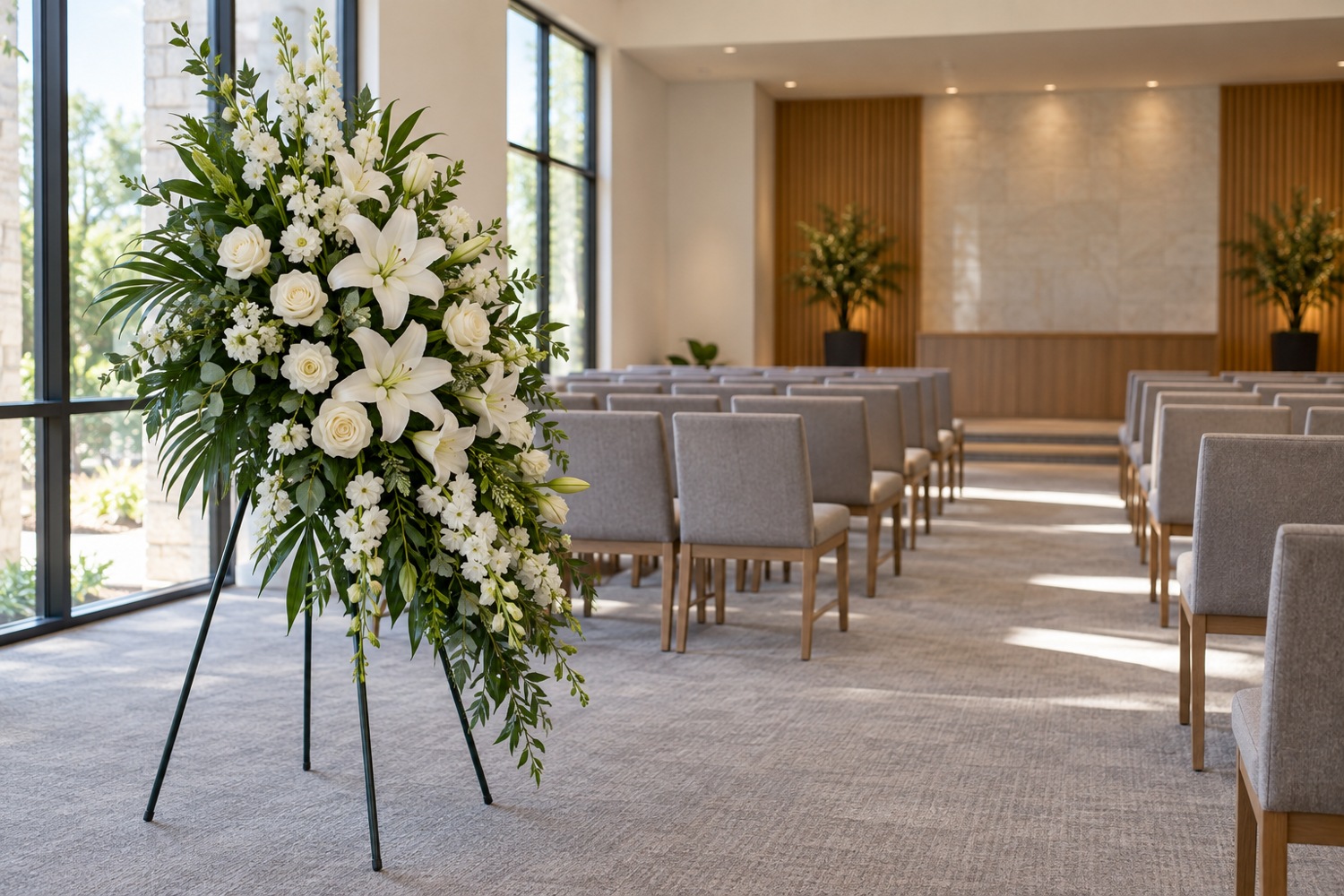
Picture the room before you order. A service venue, a graveside and a family home each hold a different form.
A standing piece needs an easel and a place at the front. It belongs at a service rather than in somebody’s hallway. A large arrangement delivered to a house on the morning of a funeral is a burden, not a kindness. Everybody there is walking out the door.
Read the death notice first. It is where a family will say ‘family flowers only’, or ask for donations to a charity instead. The Southern Metropolitan Cemeteries Trust runs Springvale Botanical Cemetery and Bunurong Memorial Park. It puts the etiquette plainly: follow the wishes of the family. It also says to check first where the family are of a faith you do not know well.
Do funeral flowers have to be white?
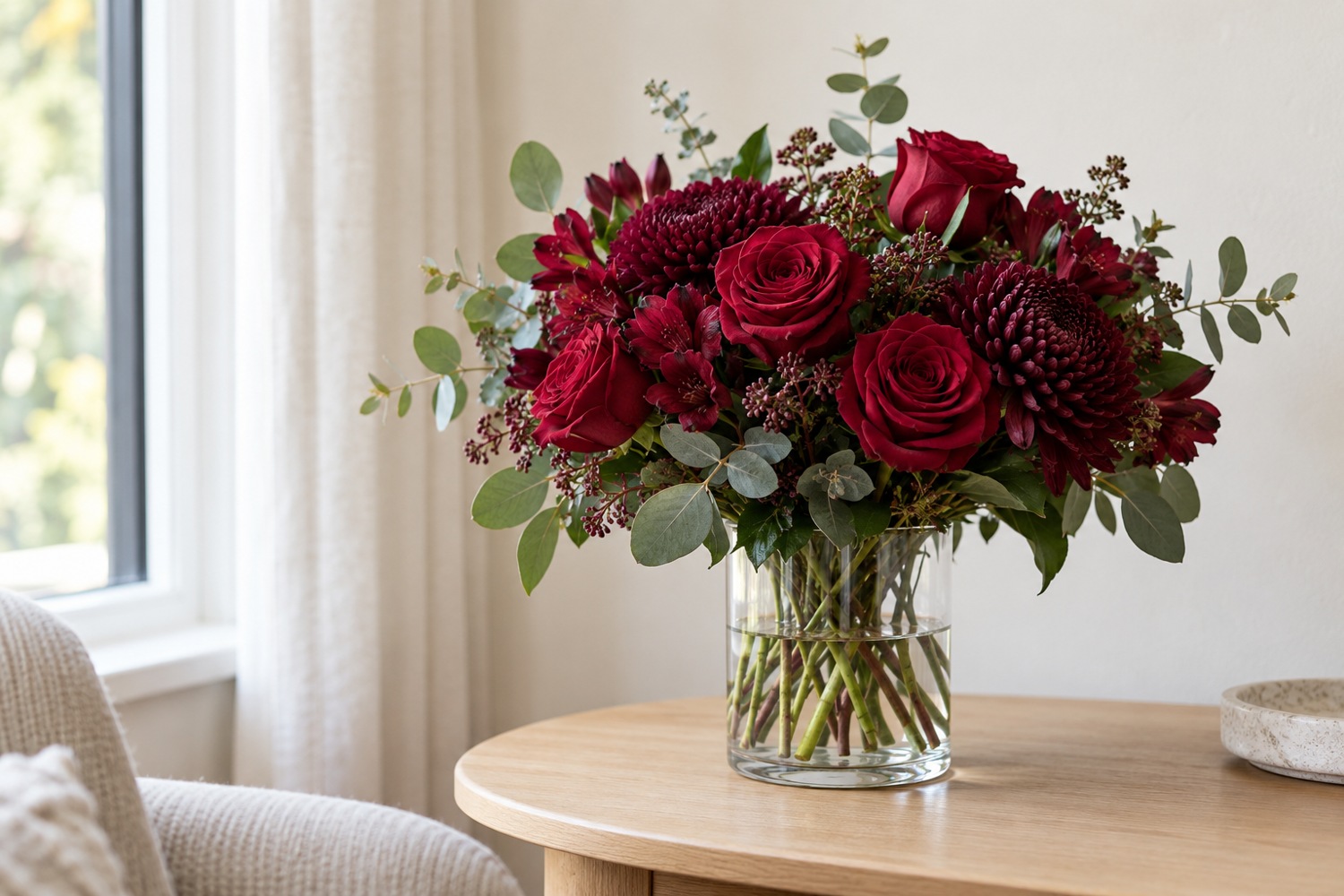
White is the convention at Australian funerals, not a rule. Nobody thinks less of you for sending colour, as long as it has been chosen with care.
Restraint is what reads as considered. A single deep tone, a soft range of pastels, or the colours the person wore all work well. Mixed brights read as celebratory, which is a different brief.
The sympathy range on our own shelves is not all white. Two of the four are white bouquets, one of them white roses only. Another is a bright yellow posy. It is there for the person who would have hated a room full of white.
What to write on the card
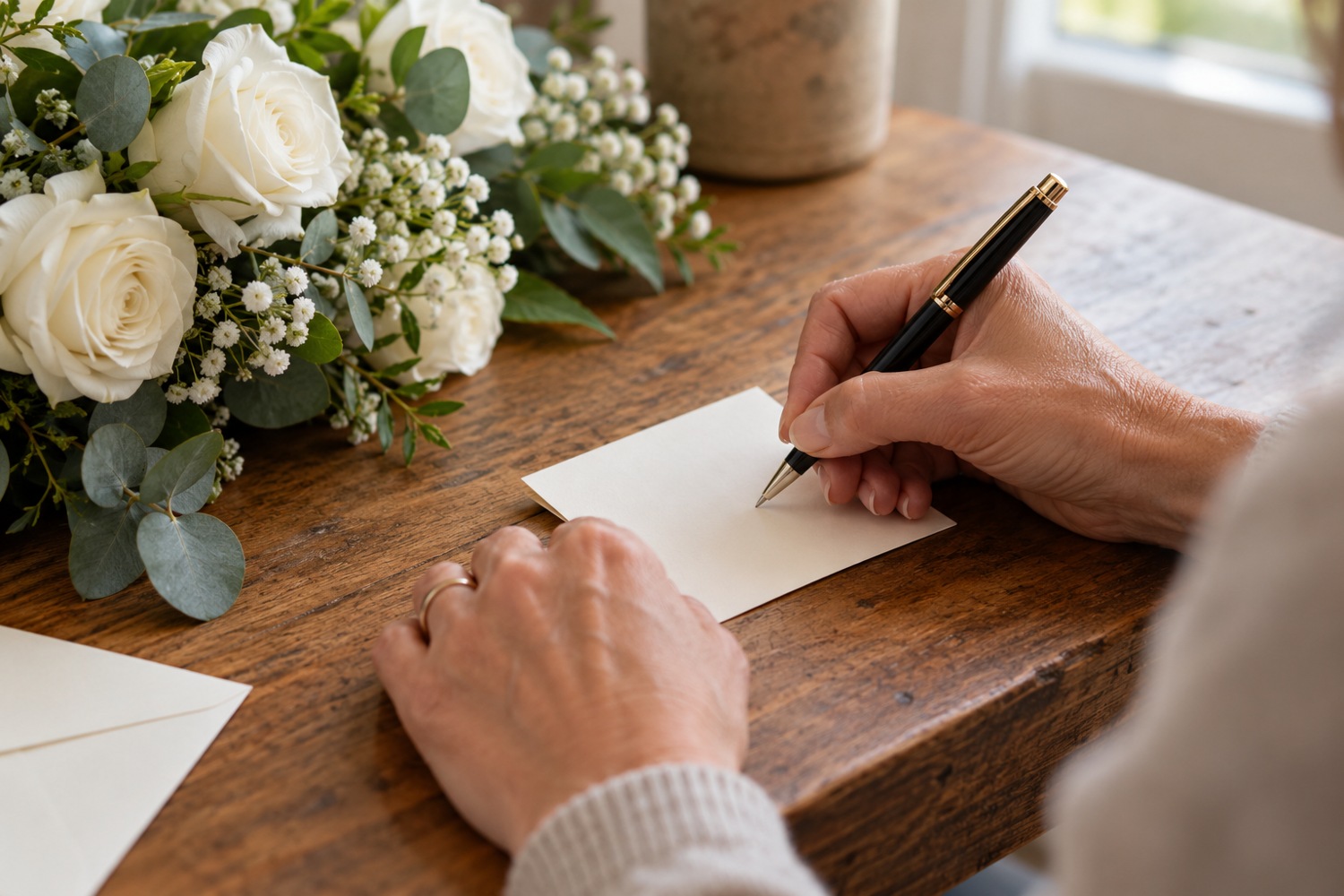
Keep the card short. A florist’s card is small.
Write the message out before you order, because the words are harder to find on the spot.
- From a workplace: ‘With sympathy from all of us at [workplace]. We are thinking of you.’
- For a close friend: ‘There are no right words. We are here whenever you need us.’
- For someone you knew a little: ‘So sorry to hear about [name]. Thinking of your whole family.’
- When you cannot be there: ‘Sorry we cannot be with you today. Our love is with you all.’
How long before the service should you order?
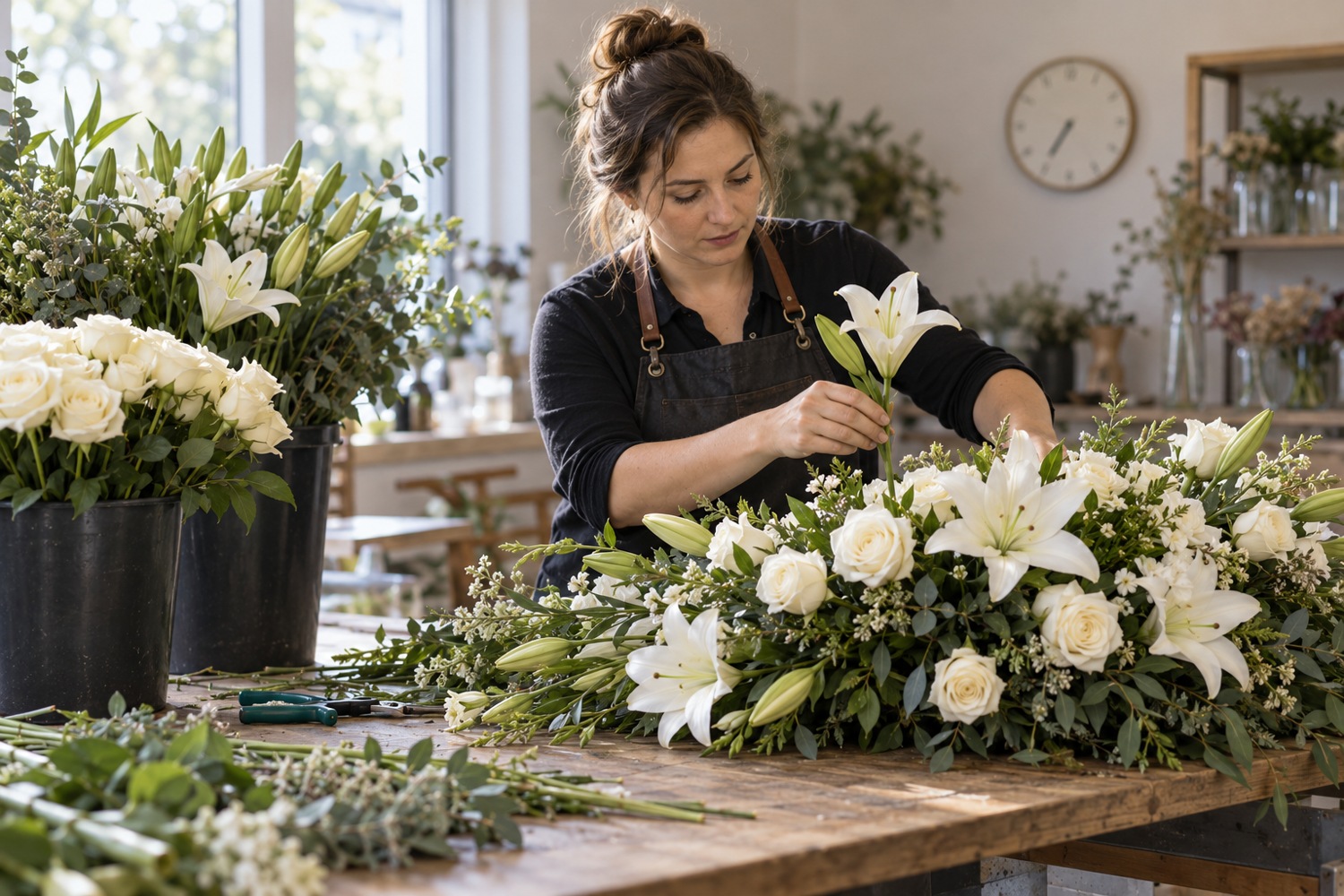
Most florists offer same day delivery, so a bouquet to a house can go out today. A casket arrangement or a standing spray is a different job. Bethel Funerals suggests allowing two to three days for sourcing and styling, because those are built to order.
For a service, the funeral director wants the flowers there on the day of the funeral, as early as possible. In Melbourne’s inner east a weekday chapel often has another service booked in behind. The timetable does not wait. A venue delivery needs three details: the funeral director’s name and address, the name of the person who has died, and the time of the service. Ask the funeral director about their own delivery rules, because they vary.
Flowers to the family home run on a longer clock. They are usually sent within two to three weeks of the death. There is no rush on the first morning.
Our own same day orders have to be placed before 12pm, and we are closed on Sundays and public holidays. A Monday service therefore means speaking to somebody on the Saturday.
What happens to the flowers after the service
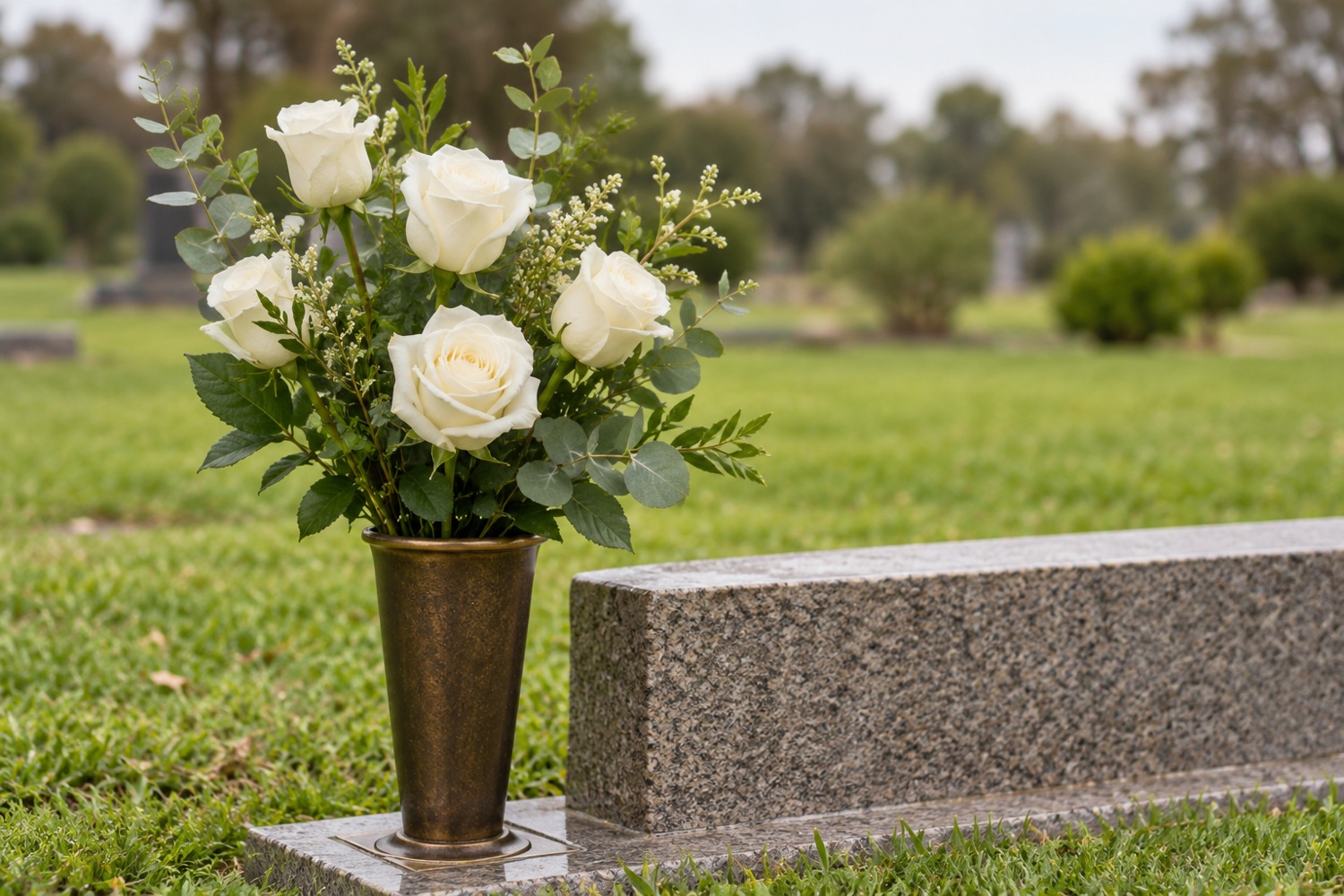
Flowers from a service are often taken on to the graveside, and that changes what is worth ordering. The Southern Metropolitan Cemeteries Trust’s guidelines for its Victorian cemeteries say what a burial or memorial site can hold.
Fresh or dried tributes are asked for, because they break down over time. Artificial ones cannot be recycled. Wrapping and rubber bands are taken off before flowers go into a vase. Wrapping becomes litter, and rubber bands can harm wildlife. Each site can hold two vases at most, and withered tributes are cleared away as part of routine maintenance.
An arrangement that only holds its shape inside its wrapping is the wrong choice for a graveside. Stems that stand on their own in water are the right one.
If you are still unsure what to send, ring Monet de Fleur on 03 9813 2002. Tell us your budget, the colour you have in mind and a little about the person. We will talk it through with you.
Frequently asked questions
What is the difference between a wreath and a sheaf?
The shape is the difference. One is a closed circle on a frame. The other is a flat bundle of stems tied at one end, made to be laid down.
Can you send funeral flowers if you are not going to the service?
Yes, and the home is the better address for it. Nothing about the etiquette assumes you were in the room. A bouquet that turns up after the funeral is still welcome.
What do you do when the notice says family flowers only?
Take it at face value. Send a card instead, or give to the charity the family has named. Doing what they asked for is the point.
How soon after someone dies should flowers arrive?
It depends on the address. Flowers for the service have to be there on the morning of the funeral. Flowers for the house are fine at any time in the two or three weeks that follow.